

Views: 4
Table of Contents
- 1 One Process, Followed With Minor Variations Across the Country
- 2 Step 1 — Confirm Eligibility Before Approaching Any Mandir
- 3 Step 2 — Identify and Contact a Mandir
- 4 Step 3 — Gather Documents
- 5 Step 4 — Shuddhi Ceremony, If One Partner Is Not Hindu
- 6 Step 5 — Document Verification
- 7 Step 6 — The Havan and Saptapadi
- 8 Step 7 — Signing the Marriage Register
- 9 Step 8 — Receiving the Same-Day Certificate
- 10 Step 9 — SDM Registration: Strongly Recommended Everywhere
- 11 Step 10 — Preserve Both Certificates
- 12 Where the Process Genuinely Varies by State or City
- 13 Frequently Asked Questions
- 14 Why Choose Quick Divorce
- 15 Need Consultation for Arya Samaj Marriage in India
One Process, Followed With Minor Variations Across the Country
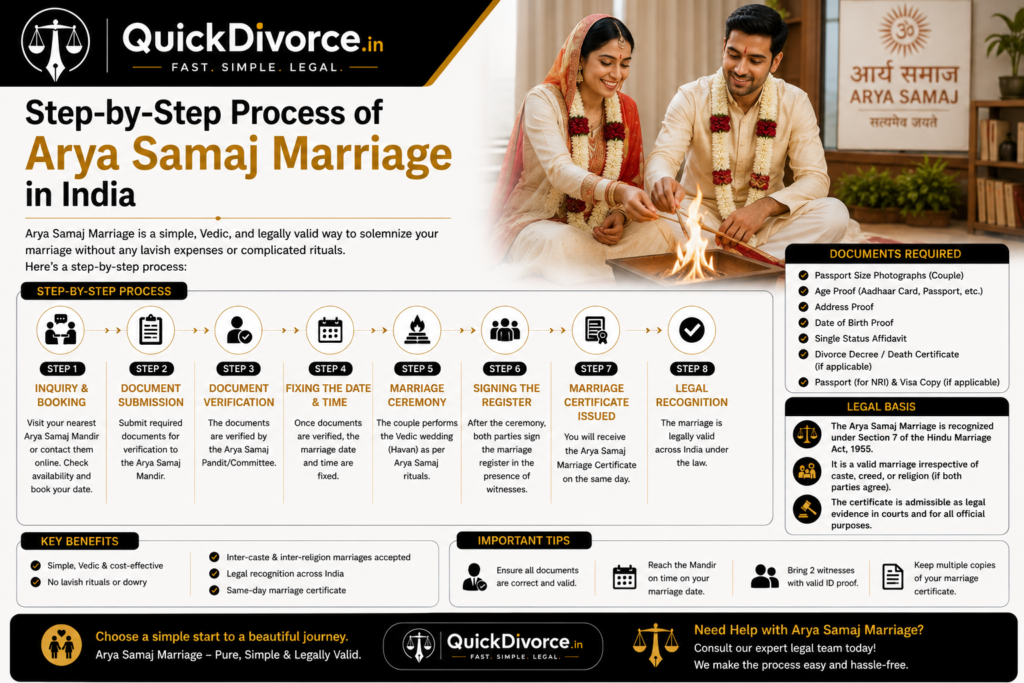
Arya Samaj Marriage in India has become one of the most preferred marriage options for couples seeking a simple, legally recognized, and hassle-free wedding ceremony in India. Known for its Vedic rituals, affordability, and quick process, Arya Samaj Marriage is especially popular among inter-caste couples, love marriage couples, and individuals who wish to avoid elaborate traditional wedding ceremonies. The marriage is solemnized according to Vedic principles and is recognized under the Hindu Marriage Act, making it legally valid throughout India.
One of the biggest advantages of an Arya Samaj Marriage is the straightforward procedure involved. From document verification and witness requirements to the marriage ceremony and issuance of the marriage certificate, the process is designed to be efficient and accessible. Couples can often complete the ceremony within a single day, provided all eligibility conditions and documentation requirements are fulfilled.
However, despite its simplicity, it is important to understand every stage of the process carefully. Proper preparation of documents, selection of a recognized Arya Samaj Mandir, compliance with legal age requirements, and subsequent marriage registration can all play an important role in ensuring a smooth experience. In this guide, we explain the complete Step-by-Step Process of Arya Samaj Marriage in India, covering everything from eligibility and documentation to the ceremony, certificate issuance, and government registration.
Step-by-Step Arya Samaj Marriage Process in India
Step 1 — Confirm Eligibility Before Approaching Any Mandir
Before making any arrangements for an Arya Samaj marriage, it is important to ensure that both parties meet the legal and religious eligibility requirements. Arya Samaj marriages are generally performed for individuals who belong to the Hindu, Sikh, Jain, or Buddhist faiths. If one of the partners belongs to another religion, a Shuddhi (purification and conversion) ceremony may be required before the marriage can take place.
The groom must be at least 21 years of age, while the bride must be at least 18 years old. These age requirements are mandatory under Indian law and cannot be waived. In addition, both individuals must be legally free to marry. This means they should either be unmarried, legally divorced with a valid court decree, or widowed with documentary proof such as the death certificate of the former spouse.
Equally important is the requirement of free and voluntary consent. Neither party should be under pressure, coercion, threat, or undue influence. Arya Samaj marriages are open to couples from different castes, communities, regions, and linguistic backgrounds, making them a preferred choice for inter-caste and inter-community marriages across India.
Step 2 — Identify and Contact a Mandir
Once eligibility has been confirmed, the next step is selecting a recognized Arya Samaj Mandir. Arya Samaj Mandirs operate independently throughout India, and while the legal framework remains similar, administrative procedures may differ from one Mandir to another.
Couples should contact the Mandir in advance rather than arriving without prior communication. During the initial discussion, it is advisable to confirm appointment availability, ceremony timing, required documents, witness requirements, and applicable fees. Some Mandirs provide same-day marriage services, while others may require appointments several days in advance.
Speaking with the Mandir beforehand can prevent last-minute surprises and ensure that all preparations are completed smoothly. This simple step often saves considerable time and reduces stress on the day of the marriage.
Step 3 — Gather Documents
Document preparation is one of the most important stages in the Arya Samaj marriage process. Missing or incorrect documents can result in delays or postponement of the ceremony.
Typically, both partners must provide identity proof such as Aadhaar Card, Passport, Voter ID Card, or any other government-issued identification. Age proof is also mandatory and may include a birth certificate, Class 10 certificate, passport, or any officially recognized document showing the date of birth.
Address proof documents are generally required to establish residential details. Recent utility bills, Aadhaar Cards, passports, or voter identification cards are commonly accepted for this purpose.
Passport-sized photographs of both parties are usually required for marriage records and certificate issuance. If either individual was previously married, supporting documents such as a divorce decree or the death certificate of the former spouse must also be submitted.
Additionally, two witnesses are required for the marriage ceremony. Witnesses must carry valid identification documents and should be adults capable of confirming the marriage voluntarily took place.
For NRI and foreign-national marriages, additional requirements may apply. These can include passports, valid visas, residence permits, and, in some situations, a No Objection Certificate (NOC) issued by the relevant embassy or consulate.
Step 4 — Shuddhi Ceremony, If One Partner Is Not Hindu
When one of the partners belongs to a religion outside the Hindu fold, the Arya Samaj institution may conduct a Shuddhi ceremony before the marriage. The purpose of this ceremony is to facilitate religious conversion according to Arya Samaj principles.
The process is generally simple and respectful. It usually involves Vedic prayers, spiritual guidance, and formal acceptance of Hindu beliefs and practices. In many cases, the Shuddhi ceremony is conducted on the same day as the marriage, allowing the entire process to be completed efficiently.
The exact procedure may vary between Mandirs, but the objective remains the same: ensuring that the marriage complies with Arya Samaj religious requirements before solemnization.
Step 5 — Document Verification
Before the wedding ceremony begins, Mandir authorities conduct a thorough verification of all submitted documents. Original documents are checked against photocopies to ensure authenticity and accuracy.
This verification process is essential because the marriage certificate issued by the Mandir is based upon the information provided by the couple. Any discrepancy in names, dates of birth, addresses, or marital status can create legal complications later.
Couples are therefore advised to review all documents carefully before submission and ensure that all details are consistent across various records.
Step 6 — The Havan and Saptapadi
The marriage ceremony itself is the most important stage of the entire process. Arya Samaj marriages are performed according to Vedic traditions and focus on simplicity rather than elaborate rituals.
The ceremony begins with a Havan, a sacred fire ritual during which Vedic mantras are recited. The fire serves as a divine witness to the marriage and symbolizes purity, commitment, and spiritual unity.
Following the Havan, the couple performs the Saptapadi, or seven sacred steps around the fire. Each step represents a promise relating to mutual support, trust, prosperity, family welfare, companionship, and lifelong commitment.
The completion of these rituals constitutes the solemnization of the marriage under Hindu law. Regardless of regional customs or local traditions, the Havan and Saptapadi remain central to every Arya Samaj marriage ceremony.
Step 7 — Signing the Marriage Register
After the religious ceremony concludes, both spouses and their witnesses sign the official marriage register maintained by the Mandir.
This register serves as a permanent record of the marriage and contains important information regarding the ceremony, including the names of the parties, witnesses, and date of marriage.
The signatures of both spouses and witnesses help establish that the marriage was performed voluntarily and in accordance with the prescribed procedures. This step is an important administrative requirement and should not be overlooked.
Step 8 — Receiving the Same-Day Certificate
One of the major advantages of an Arya Samaj marriage is the issuance of a marriage certificate on the same day in many cases.
After completion of the ceremony and registration formalities, the Mandir issues an Arya Samaj Marriage Certificate bearing its official seal and authorized signatures. This document serves as proof that the marriage was solemnized according to Arya Samaj traditions and Hindu law.
Many couples choose Arya Samaj marriage specifically because of the speed and simplicity with which this certificate can be obtained.
Step 9 — SDM Registration: Strongly Recommended Everywhere
Although the Arya Samaj Marriage Certificate is valuable, couples are strongly advised to register their marriage with the appropriate government authority, usually the office of the Sub-Divisional Magistrate (SDM).
Government registration provides an additional layer of legal recognition and results in the issuance of an official government marriage certificate. This certificate is widely accepted for passports, visas, immigration applications, bank records, insurance claims, and numerous other official purposes.
The registration process varies by state and city. Appointment systems, documentation requirements, fees, and processing times may differ depending on local regulations. Couples should verify the current procedure applicable in their jurisdiction before proceeding.
For couples planning international travel, visa applications, or overseas relocation, government registration is particularly important and should be completed as soon as possible after the marriage.
Step 10 — Preserve Both Certificates
After completing the marriage process, it is essential to safely preserve all marriage-related documents. Both the Arya Samaj Marriage Certificate and the government-issued marriage certificate should be stored securely.
Couples should maintain multiple photocopies and digital scans of these documents. Electronic backups stored securely in cloud storage or encrypted devices can prove invaluable if originals are misplaced or damaged.
Marriage certificates are frequently required for passport applications, spouse visas, immigration matters, property transactions, insurance claims, legal proceedings, and various government services. Having easy access to these records can save considerable time and effort in the future.
Proper preservation of both certificates ensures that proof of marriage remains available whenever required, making it one of the most important final steps in the Arya Samaj marriage process.
Where the Process Genuinely Varies by State or City
Notice and appointment requirements at the SDM stage — some cities require online appointment booking; smaller towns may still operate on a walk-in basis.
Mandir fees — typically Rs. 5,000 to Rs. 15,000 nationally, but metro cities generally sit toward the higher end of that range; see our detailed cost guide for a full breakdown.
Processing speed for SDM registration — generally faster in cities with digitized systems, slower in areas still relying on manual registers.
Frequently Asked Questions
1. What is an Arya Samaj Marriage?
Arya Samaj Marriage is a legally recognized Hindu marriage performed according to Vedic rituals and principles established by the Arya Samaj movement. It is known for its simple procedures and minimal ceremonial requirements.
2. Who can get married through Arya Samaj?
Individuals belonging to the Hindu, Sikh, Jain, or Buddhist faiths can marry through Arya Samaj. In certain cases, a person from another religion may undergo a Shuddhi (conversion) ceremony before the marriage.
3. What is the minimum age for Arya Samaj Marriage?
The groom must be at least 21 years old, and the bride must be at least 18 years old, as required under Indian law.
4. What documents are required for Arya Samaj Marriage?
Generally, couples need identity proof, age proof, address proof, passport-sized photographs, and, if applicable, divorce decrees or death certificates of former spouses. Witnesses must also provide valid ID proof.
5. Are witnesses required for Arya Samaj Marriage?
Yes. Usually, two adult witnesses are required to be present during the marriage ceremony and sign the marriage register.
6. How long does the Arya Samaj Marriage process take?
In many cases, the ceremony and issuance of the Arya Samaj Marriage Certificate can be completed on the same day, provided all documents are in order.
Why Choose Quick Divorce
We help couples across India navigate both the Mandir ceremony and SDM registration correctly, accounting for local variations in process and documentation requirements.
📞 Call / WhatsApp: 8595439395
Need Consultation for Arya Samaj Marriage in India
🟡 QuickDivorce.in offers complete Arya Samaj Marriage assistance — document support, solemnization, certificate assistance, witness coordination, and marriage registration services across India.
🟡 For other Legal and Trademark related services
👉 Money Recovery Cases
👉 Property Disputes
👉 Business & Licence Registrations
🟡Visit Business24hub for IT services
👉 Mutual Consent Divorce at
👉 Contested Divorce Filing
👉 Child Custody and Maintenance
👉 Matrimonial Property Settlement
👉 NRI Divorce Services
👉 Alimony and Maintenance
🟡 Protect Your Rights
👉 Domestic Violence Legal Support
👉 Stridhan Recovery
📞 Call Now: +91 8595439395
🕐 Free Consultation: Monday to Saturday, 10 AM to 6 PM
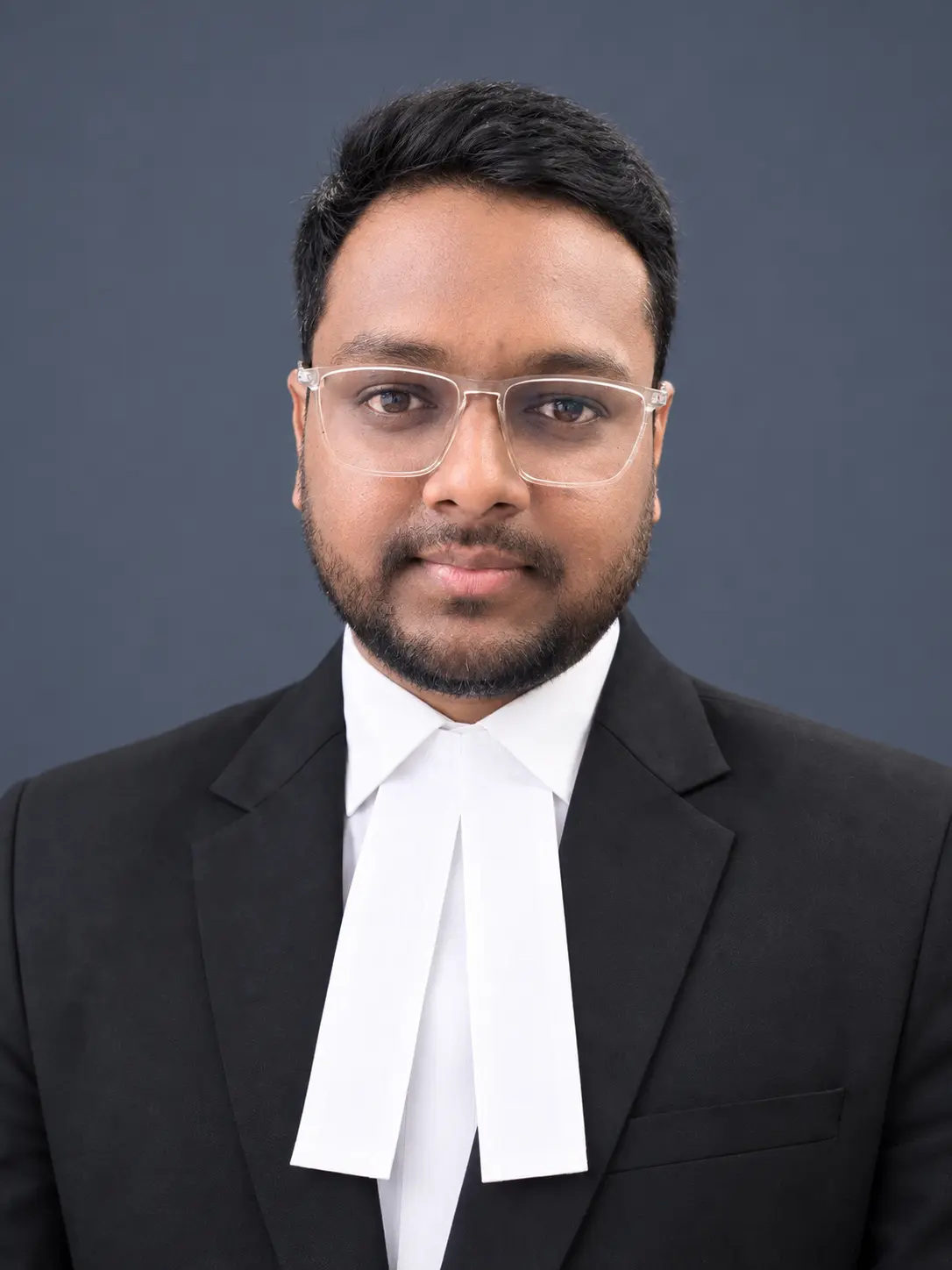
Adv. Manish Kashyap is a Family Law & Divorce Lawyer with extensive experience in Mutual & Contested Divorce, NRI Divorce, Child Custody, Alimony, Domestic Violence, Judicial Separation, and Family Court matters, providing professional legal guidance to clients.

